Joseph Perry
Director, Energy & Infrastructure
Hit enter to search or Esc to close
Director
Blog
7 min
30th April 2026

Most capital programmes still measure performance in cost-to-build, budget variance, and schedule adherence. All important. But incomplete. In practice, a delayed project does not just cost more, it delays revenue and cash flow. Across a portfolio, those delays compound into material value erosion. In a high-growth but still uncertain demand environment, this matters even more. Timing and sequencing of decisions can materially change outcomes.
The UK’s infrastructure pipeline stands at almost £1 trillion of recorded capital cost in ongoing projects. Analysis of ONS infrastructure statistics against the National Infrastructure and Construction Pipeline reveals that between 2015 and 2024, only 59 percent of planned infrastructure spending actually materialised – a shortfall of £163 billion. NISTA warns that failure to reverse this pattern could leave more than £250 billion of infrastructure commitments undelivered over the next decade. Only 11 percent of projects in the Government Major Projects Portfolio were rated as likely to succeed on time and within budget, down from 48 percent a decade ago.
These are not abstract programme management statistics. They have a direct, measurable financial cost and that cost is being paid right now. In 2025, Britain spent £1.46 billion dealing with wind curtailment and replacement generation, up from £1.23 billion in 2024. Over £1 billion of that was spent switching off wind farms and burning expensive gas instead. The cause is straightforward: generation is growing faster than transmission infrastructure can carry it. Without urgent action, these costs could soar to £8 billion a year by 2030 and are already adding an estimated £15 to a typical household bill in late 2025.
The ENA/BEAMA Electricity Networks Sector Growth Plan confirms that a constrained network will not only hold back the energy transition but will actively increase costs and delay connection for generators and users alike. The RIIO-T3 price control period alone is expected to add £5 billion to UK GDP and support over 100,000 jobs. Each year that investment is delayed is a year that economic benefit is deferred and the cost of doing nothing accumulates.
The delivery argument is therefore a financial one. Delayed infrastructure destroys value upstream through deferred revenue and foregone economic benefit, and amplifies cost downstream through EPC complexity, rework, and commissioning failure. Martin Pibworth, CEO of SSE, made the point precisely at International Energy Week: SSE’s £15 billion transmission investment programme will avoid £6 billion in curtailment costs if it is delivered on time and in full.
It is also worth noting that this is not a uniquely British challenge. US utilities are planning more than $1.1 trillion of electricity infrastructure investment over the next five years against a backdrop of 2,500 gigawatts stuck in connection queues and median project wait times now approaching five years. In Europe, an estimated 1,700 gigawatts of renewable energy projects are delayed in grid connection processes. The structural gap between capital committed and capital deployed is a global condition and the UK faces it at its most acute.
“Those upgrades are not just infrastructure, they are the unlock for an entire economic growth agenda.”
JP
Delays in infrastructure are predominantly created in the development and permitting phase, before projects are construction-ready and are then amplified throughout EPC and commissioning. This is not a nuanced observation, it is the decisive fact that programme leaders are most consistently underweight when planning for delivery.
Government figures on nationally significant infrastructure projects show that between 2012 and 2021, delivery time increased by 65%, much of this driven by the pre-application process alone. The time taken to prepare an application has doubled from one to two years since the NSIP regime’s inception. The UK pre-construction phase is the slowest among peer nations – 65 months on average against a peer group average of 50, and for rail projects the UK is 50% slower than average.
The cascade dynamic matters here. A poorly bounded pre-FID phase produces a poorly scoped mobilisation. A poorly scoped mobilisation produces a constrained EPC phase. A constrained EPC phase produces a commissioning programme that has already absorbed its contingency before concrete has been poured. Financial erosion compounds at each stage and each stage makes the next one harder to recover.
The Planning and Infrastructure Act, which received Royal Assent in December 2025, introduces reforms to reduce consenting delays, limit legal challenges, and prioritise grid access for clean energy projects that are ready to proceed. The pre-application process for major infrastructure has been overhauled, with an average saving of about 12 months projected on major projects. These reforms matter. But as Henrik Pedersen, CEO of Associated British Ports, made clear at International Energy Week: international investors make rapid, simple assessments of barriers, and they will simply go elsewhere if the environment is not investable.
Catherine McGregor, CEO of Engie, offered a grounding data point: renewables, when conditions are right, can be constructed in a matter of months. The average delay across Engie’s capital portfolio is one month. The construction programme is not the constraint, everything that precedes it is.
The critical discipline is therefore to treat the pre-FID window not as dead time but as active mobilisation time, using it to make the downstream decisions that protect schedule and returns throughout the full lifecycle. Every day counts.
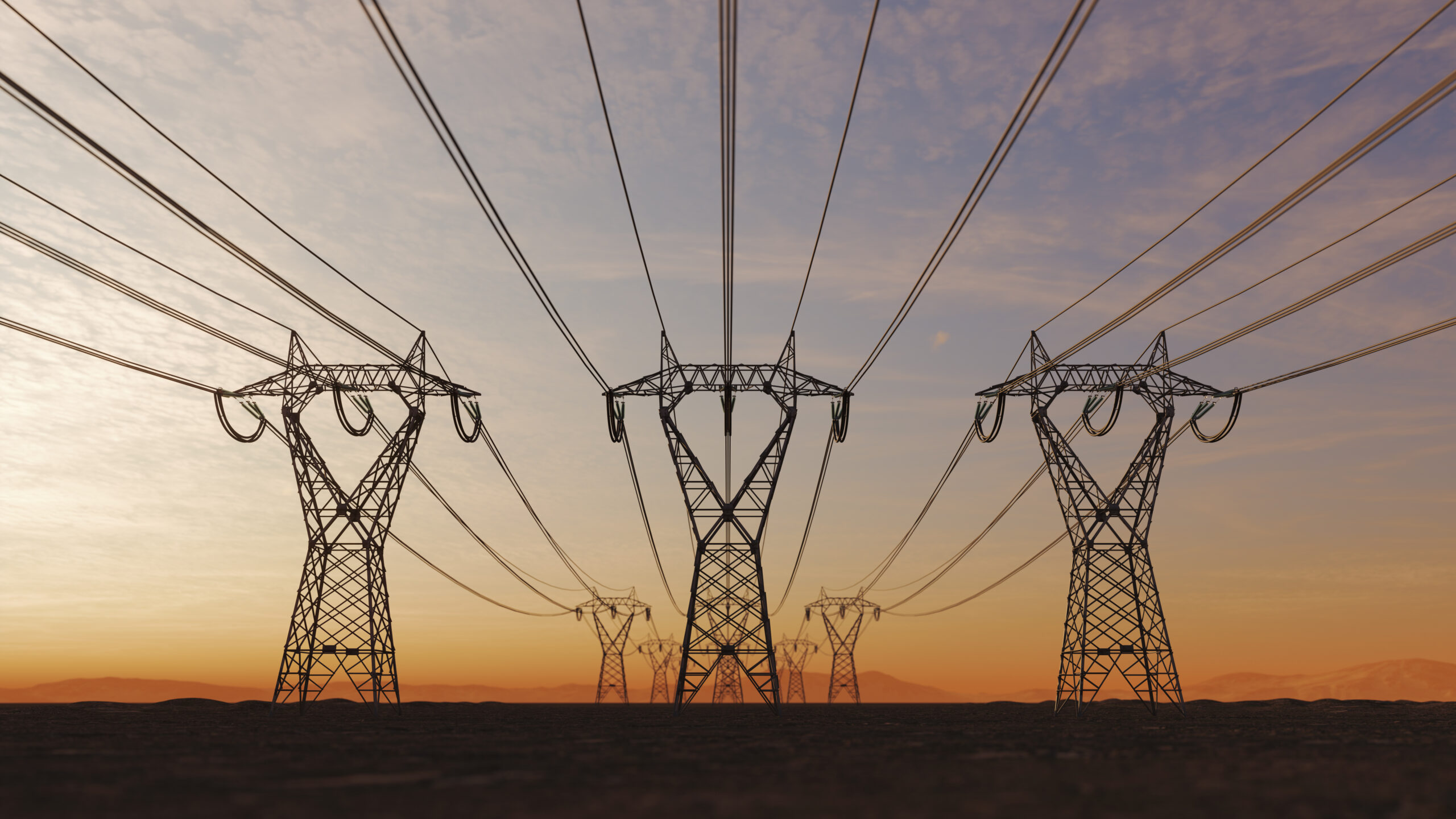
Most conversations about capital delivery focus on individual project performance but where value lies is where to invest in the system to unlock value fastest.
My colleague Benoit’s piece quotes Brian Savoy, CFO of Duke Energy, who captures this with a framing we find compelling: ‘the next best dollar.’ The concept being the next best dollar is spent where it unblocks the wider system to get capital and value moving across the portfolio.
This arises because capital projects do not operate in isolation. They share engineering resources, equipment, construction capacity, and the war for talent. So delays cascade and what starts as a single project issue quickly becomes a portfolio-level impact on returns. Many organisations are now facing a structural gap: capital is committed but not fully deployed; projects are queued behind shared constraints – EPC capacity, transformer lead times, permitting, community acceptance – and returns are being pushed further out. Much of this originates upstream, in development and pre-FID phases, where uncertainty, permitting, and interconnection timelines are hardest to control.
At the same time, the opportunity cost of delay is rising. Capital tied up in slow-moving projects is not just delayed, it is underperforming. In this environment, the timing of value is becoming as important as the value itself. This shifts the capital allocation question. It is no longer just where to invest. It is what brings value forward fastest: prioritising projects that unlock others, focusing on system throughput and execution, and removing the constraints that delay everything else.
This is directly visible in the UK. A simple example is the North East AI Growth Zone, expected to create 5,000 jobs and attract £30 billion in private investment, is dependent on electricity transmission network upgrades that double capacity across England and Wales between 2026 and 2031. Those upgrades are not just infrastructure, they are the unlock for an entire economic growth agenda. If we were to layer in the investments through Northumbrian water, Teesworks, Port build out, Forth Yards and wider industrialisation we see system complexity build and the need for joined-up systems thinking. Identifying which constraints, if removed, produce the largest cascade of downstream value requires a dynamic, simulation-based understanding of the portfolio: the interdependencies between projects, shared resource constraints, and the downstream economic impact of each sequencing decision.
“This is unglamorous work. It is also the discipline that separates programmes that mobilise confidently from those that discover their supply chain constraints six months into construction.”
JP
Even with pre-FID clarity and sequencing intelligence, programmes that do not move on supply chain early will find themselves competing for capacity that is already committed elsewhere.
The RIIO-T3 period will see the largest increase in capital spending in the history of the privatised electricity transmission sector, potentially exceeding £70 billion between 2026 and 2031. This competes with AMP8’s £96 billion water sector programme, major rail capital programmes, and accelerating data centre development all drawing on the same transformers, switchgear, cables, engineers, and civil contractors. The ENA/BEAMA report is candid about the supply-side reality: it is likely to take two to five years for manufacturers to develop a 50% increase in capacity, with some saying five years or more. One in three vacancies in the sector is already difficult to fill. At least 56,000 vacancies need to be filled by end of the RIIO-T3 and ED3 periods in occupations such as overhead linesperson, HVDC engineer, cable jointer, and senior electrical engineer, all with long training lead times that cannot be compressed at short notice.
The organisations that are ahead have moved early and deliberately. SSE’s Martin Pibworth described at International Energy Week exactly this kind of advance positioning: growing their delivery workforce from 500 to 2,700; securing supply chain partners for all eleven mega-projects before peers had started tendering; investing ahead of time in consenting and planning so the organisation was building whilst others were still bidding. National Grid’s Great Grid Partnership, a £9 billion supply chain framework covering nine major infrastructure projects, gives the supply chain visibility and confidence to invest in capacity expansion and secures National Grid priority access in a rationed market. The Sumitomo Electric HVDC cable factory in Scotland, catalysed by the ASTI regulatory framework providing certainty and early access to project funding, is the clearest illustration that strategic investment in domestic supply chain capacity is a delivery strategy, not a procurement preference.
Standardisation compounds these advantages. The GB transmission operators are driving greater alignment of equipment design specifications across the sector. Standardised specifications mean manufacturers can run longer production runs, build inventory, and scale capacity with confidence. Programmes are less exposed to single-supplier risk and procurement moves faster. This is unglamorous work. It is also the discipline that separates programmes that mobilise confidently from those that discover their supply chain constraints six months into construction.
Making delivery alliances high-performing is the harder companion challenge. When multi-organisation programmes stall, it is rarely because the technical solution was wrong. It is because the operating model did not create genuine shared accountability, the governance structure was too slow to resolve conflicts, or commercial incentives between partners were misaligned with the outcomes the programme needed. Commercial innovation that aligns fee structures and performance obligations with the outputs that actually matter is as important as any procurement or engineering discipline.
Even when planning is cleared, mobilisation is disciplined, and alliances are functioning well, the construction and commissioning phase is where most programmes discover the gap between schedule confidence and schedule reality.
As we have explored, delays in construction can often be rooted to delays pre-construction, the resulting compression of timelines and a mobilisation which does not effectively enable the core assumptions that underpin the strategy everyone invested in at FID. However the way this propagates through construction can be managed and mitigated, and the root cause is almost always the same: a deficit of data-driven, programmatic grip across the end-to-end delivery system that seeks to ‘reset’ what is possible rather than running at what is not. In this world decisions are made on feel and limited facts, risks that we know are identified late when recovery options have already narrowed, supply chain bottlenecks become visible only once they have caused delay. The result is the pattern every programme director knows too well, the schedule that looked credible at mobilisation begins unravelling under the friction of reality.
Many organisations are turning to technology and, dare I say, AI as the answer to this friction, to recover schedules or deliver a step-change in baseline cost and schedule timeframes. It is true that technology is now genuinely changing what is possible. National Grid has launched the world’s first centralised, autonomous aerial inspection capability for electricity infrastructure, deploying drones beyond visual line of sight to inspect high-voltage towers and conductors across its transmission network (National Grid), freeing skilled engineers to focus on tasks that require human performance rather than routine survey. Drone-based transmission line stringing, pioneered by companies like Infravision and now deployed across major programmes globally, replaces traditional helicopter and labour-intensive ground methods, enabling lines to be installed with greater precision, reduced logistical complexity and significantly improved safety (Highways Today) – particularly valuable across the challenging terrain that much of the UK’s transmission grid expansion requires. AI-driven schedule risk analysis, trained on vast historical datasets of construction programmes, can now detect the early signatures of delay before they have materialised into lost time.
Where there is automation of manual activity, clearly there is benefit and we should reap the rewards. The problem is these get after the 1% benefits, not the 20-30% benefits. Today the majority of capital delivery is designed and delivered by humans, and will continue to be done so during the next decade. The UK construction workforce of 2.1 million is down 12% from its pre-pandemic level of 2.4 million and needs to grow by more than one million people – over 40% – to meet increased planned spending ambition if productivity growth remains static (McKinsey & Company). The answer cannot be just more people and so innovation in this context is not just technology, it is people and technology, it is shifting the dial by 40%.
My colleague Craig explores this in his piece on ‘industrialising AI in asset-intensive environments’: what converts sensing capability into programme performance is human decision capability and the two must develop together or the technology investment amplifies anxiety rather than action. Detecting a supply chain risk six months early creates value only if the organisation is structured to respond six months earlier. If decision rights are unclear and governance forums are slow, earlier warning produces earlier anxiety. Sensing faster without deciding faster is not progress.
The answer is is building the organisational muscle to do the basics exceptionally well through the boom-and-bust cycles that define the next decade. Standardised delivery methods that can scale. Commercial innovation that aligns incentives throughout the supply chain. Strategic investment in skills and capability that creates sustainable capacity rather than transient peaks. And the governance architecture that converts better information into faster, better decisions.

The UK has the ambition. It has the capital. The electricity networks sector alone is capable of adding £5 billion to UK GDP, generating up to 130,000 additional jobs, and powering every sector from automotive to AI infrastructure. The same potential exists across water, nuclear, rail, ports, and metals and minerals.
But the opportunity is not simply a function of capital committed, it is a function of capital deployed: on time, in the right sequence, with the right supply chain, governed well enough to act on what the data reveals. Delay destroys value. It destroys it in foregone economic growth, in curtailment costs borne by consumers, and in infrastructure that arrives too late to unlock the investments waiting for it.
The organisations that will define this decade are not waiting for conditions to improve. They are already using pre-FID time as active mobilisation. They are already sequencing their portfolios around which constraints, if removed, unlock the most system value fastest. They are already securing long-lead supply chain capacity and investing in the simulation-based delivery intelligence that makes construction performance visible and actionable.
The race has started. The question Fintan Slye posed at International Energy Week is the one that matters now: are the organisations responsible for delivery built to meet the moment?
The answer will be measured not in plans and programmes, but in electrons delivered, pipes laid, and track commissioned, and in the returns, jobs, and economic growth that follow.
This is the third in a series of perspectives from Newton’s infrastructure & energy team following International Energy Week 2026.
Read Craig Hoggett’s piece on the organisational challenge at the heart of capital delivery, David Hart’s article on turning asset management into strategic advantage, and Benoit Laclau’s reflections on these challenges in the US.

Would you like to visit our XXXX website?
Visit the UK site