Hit enter to search or Esc to close
All or nothing: How can you break free from the boom and bust range proliferation cycle?
Director
Blog
7 min
16th April 2026

Retailers and consumer packaged goods businesses can fall into the trap of growing their offering to the point that consumers are overwhelmed with choice.
But it doesn’t have to be that way. Make the right range choices and the results speak for themselves:
- 2-5% increase in sales driven by improved range availability on reduced range
- 10%+ improvement in availability for customers driven by reduced range, increased stock levels and easier pick and replenishment
- 10%+ improvement in store and warehouse productivity driven by reduced range and pick and replenishment frequency
Max James, Retail and Consumer Goods Director at Newton, has been working with leading retailers and CPGs to achieve these outcomes – delivering win-wins for both businesses and customers. Here, he reveals the root causes of excessive range proliferation and how to strike the optimal balance between developing innovations that excite customers and the practical considerations of cost and capacity.
There are many good reasons to grow your range. Whilst I sometimes wonder if the supply chain might be happier with the simplicity of a ‘range of one’, we can all agree that it is unlikely to be the optimum. Google AI suggests that Crocs is a good example of a successful business with a single product focus but even it is now selling everything from flip flops to tote bags.
Each incremental range choice can feel like a no brainer, offering shoppers additional choice with little to no measured additional cost of complexity. From the CPG angle, it may even offer additional shelf space over your competitors.
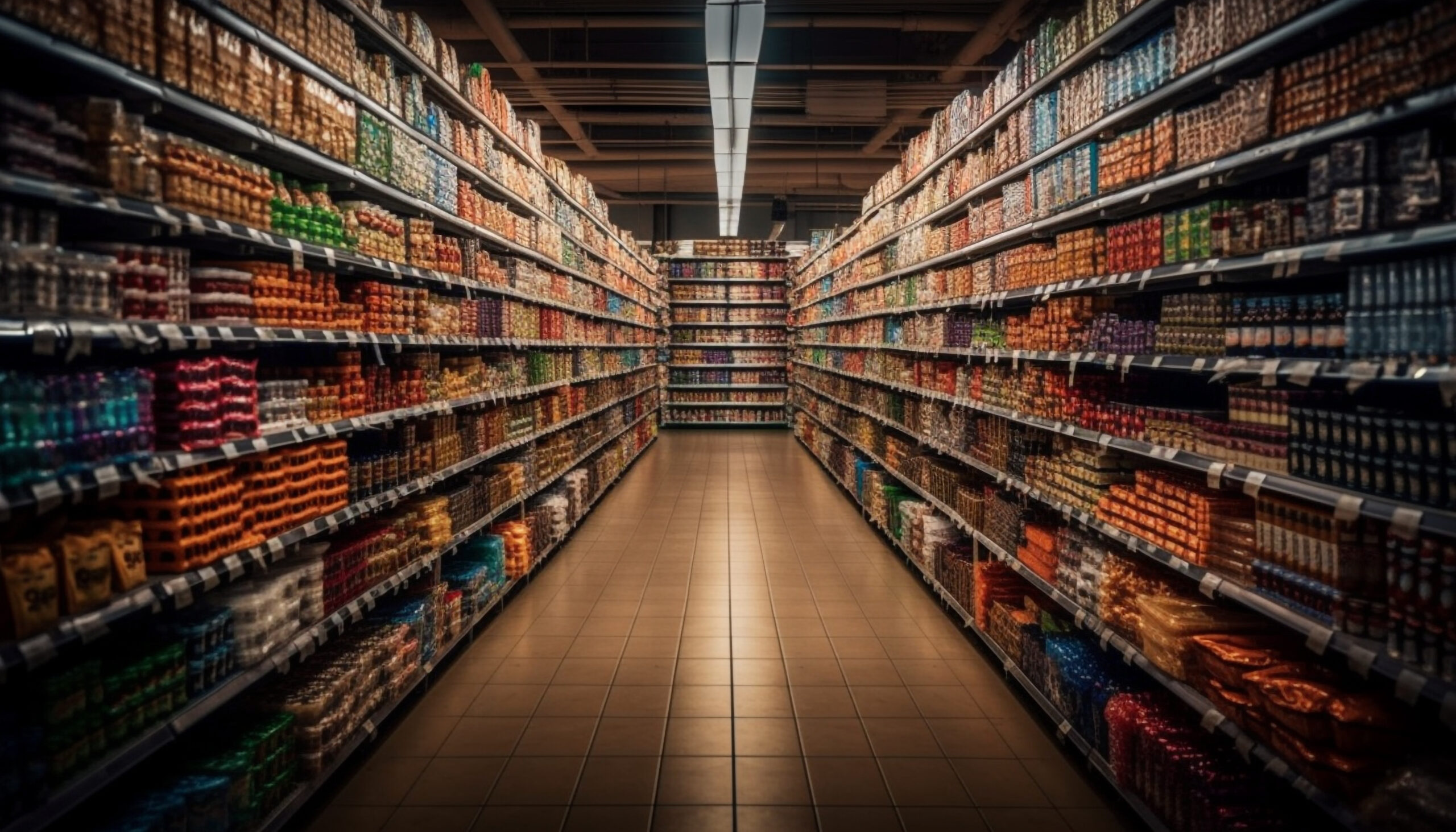
However, this incremental range growth has an inevitable outcome if left unchecked for a number of years. Eventually, you take a step back and realise that shoppers have become overwhelmed by options and are finding it hard to locate what they actually want. Items compete for share of shelf and web page, crowding one another out. Brand impact is lost in the category noise. Stock levels fall as product numbers rise. Out-of-stocks get out of control. Efficiency is affected, as store and warehouse staff struggle to pick and replenish.
In response, products are delisted, impacting supplier relationships, disrupting supply chains and increasing operational costs. A few years later, the same again.
Range proliferation root causes
This issue crops up when there are disconnects between the:
- Buyer’s commercial incentives and the shopper’s needs.
- Introduction of new products and management of the overall category.
- End-to-end decision making.
The first disconnect is behavioural. Buyers are incentivised to grow category margin and revenue. In fast-moving categories, they may decide to stock new products that are nearly identical to existing ones – not because customers want them, but because suppliers offer better deals on pricing, promotions and shelf space. The result? Choice overload. The classic “paradox of choice” often leads to decision fatigue and no purchase at all.
The second disconnect is procedural. It can take more than a year to strategically optimise a category, while a separate ongoing tactical process introduces new products. As a result, product ranges can grow and grow – leaving little room (in both senses) for shoppers’ attention. It can also mean products aren’t launched confidently with marketing.
The third disconnect is organisational. KPIs for commercial teams naturally focus on growth while stores, online and the supply chain are measured on productivity. All are focused on margin within their areas, but not across the business. A new product launch may mean a margin win for commercial but represent a loss when (or should I say ‘if’) the full end-to-end margin is considered. The overall business is impacted if this siloed approach for range decisions consistently keeps stores, online and the supply chain on the back foot.
Ending disruptive range resets
How are retailers preventing these disconnects, adopting a joined-up approach that adds value for the business and their shoppers – and prevents disruptive range resets?
- New products are genuinely new. They meet a new shopper’s need or an existing need and mission in a novel way, driving trial, repeat and growth. Substitutability with existing products is assessed at the start using AI and ML-based techniques. For example, purchase pattern analysis can identify which products, often substitutes, do not appear in the same shopper baskets. Clustering analysis can identify products with similar characteristics, grouping them into clusters within categories. If a proposed new product is a duplicate, it is only included if it replaces an existing equivalent product on a “one in, one-out” basis. Marketing and merchandising activities promote trial and repeat sales.
- Strategy and tactics are joined up. The overall category and tactical process to introduce new products enables this “one-in, one-out” approach. Category size targets (i.e. number of unique SKUs) are set annually based on category priorities. Growth opportunities and range size are reviewed regularly. If category size is above target, small corrections are made continuously to get back on track. Range shape guidance (i.e. % of SKUs within a category meeting specific shopper needs) is provided based on revenue and margin contribution, shopper penetration, and market and competitor trends.
- Commercial, stores, online and logistics are aligned. Leaders focus on improving margin for the overall business. Any range-related benefits in commercial (e.g. increased shopper spend) are traded off against any impacts in stores, online or logistics (e.g. increased pick and replenishment costs). Gen AI-based techniques, such as digital twinning, are used to simulate the impact of major range changes downstream in the store or warehouse. Decision making, communication and collaboration between functions is optimised pre-, during and post-change to ensure teams deliver optimally.
Joined–up teams armed with high quality customer and product data matched with predictive techniques can make better decisions, moving beyond the cycle of endless SKU expansion and disruptive resets. As the data at the opening of this article shows, the result is well worth the effort: lean, purposeful ranges where every product earns its place on the shelf lead to happier customers who can find and buy the products they want.
We help major retailers and CPGs with complex challenges like this, working shoulder-to-shoulder with your teams to pinpoint the root causes of problems, prioritise the options and deliver transformation.
Data sources: Internal

It seems like you're in XXXX
Would you like to visit our XXXX website?
Visit the Australian site